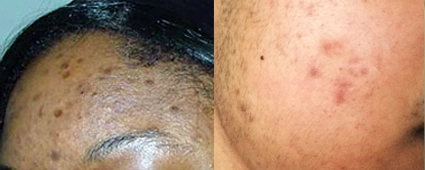
Post-inflammatory hyperpigmentation are the red or brown marks left behind from an acne lesion. During the skin’s inflammatory process, the skin cells produce more melanin, resulting in a darker skin appearance.
There is good news though. Hyperpigmentation is not scarring. It is not permanent. While it might take several months for the marks to fade and go away, they will actually go away. Treatments such as laser and chemical peels can help expedite the process, but why spend your money when they heal naturally?
How to Prevent Hyperpigmentation
There are several methods to help prevent that hyperpigmentation from forming:
- Ice, Ice, Ice – the moment you start to feel a pimple come up and it hurts and itches, maybe is a little red already, that is the moment you want to grab an ice cube and ice that pimple for several minutes. You’ll want to do this at least once a day, but we encourage more. The ice will help keep the inflammation and redness down as well as keep the white blood cells from coming into the follicle. The goal is to keep the pus from forming, as that is what causes the inflammation and ultimately that big, nice looking red mark.
- DO NOT PICK – we cannot stress this enough. Please do not pick at an acne lesion however tempting it might be. Picking at a pimple or trying to pop it on your own is dangerous business. More than likely, you’ll end up rupturing the follicle wall, resulting in a larger and worse pimple than before.
- Get rid of the source – most importantly, you need to clear your skin of acne in order to prevent hyperpigmentation. If you keep having breakouts, you’ll keep having the red marks that accompany them.
While there isn’t a cure for acne, there are controls to keep it at bay. Following a treatment system (such as our own) and combining that with icing diligently and not picking at the skin will help prevent hyperpigmentation.