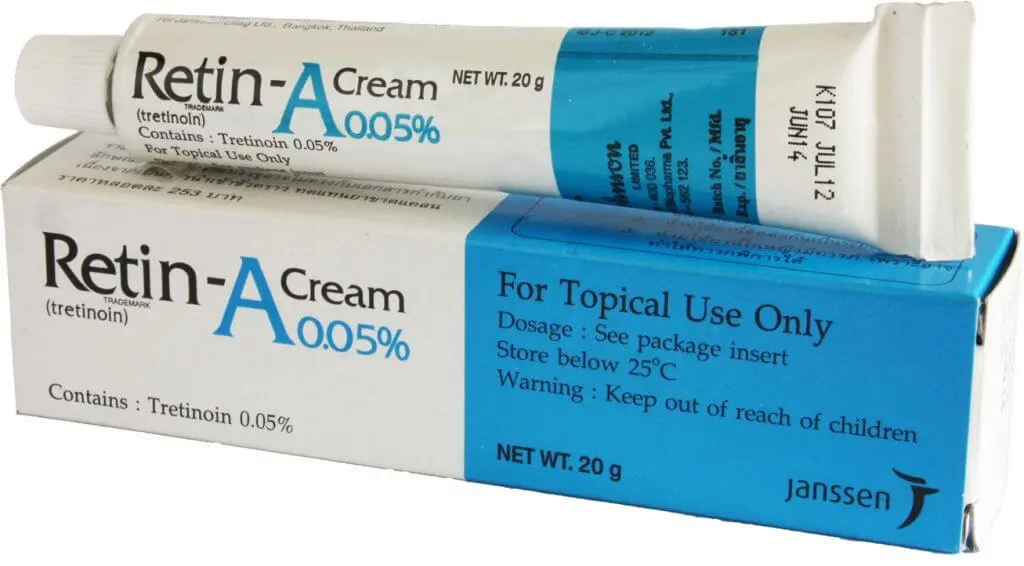
One of the most commonly prescribed drugs for acne sufferers is Retin-A. It belongs to a group of medications that are derived from vitamin A, and is used to treat mild to severe acne. The active ingredient in this medication is called tretinoin. This topical medication comes in both cream and gel form.
Vitamin A is very important to the skin. It encourages skin cell production and helps keep the skin firm. Vitamin A has to be absorbed from food, but needs to be chemically transformed by the liver in order to produce any benefits.
In the 1960s, researchers began to look for ways to make vitamin A more readily available in order to explore its pharmaceutical benefits. They were eventually able to create a synthetic version of vitamin A that didn’t need to be consumed in order to be absorbed into the body. With this synthetic version developed, topical vitamin A medications became available.
Retin-A (and any tretinoin based products) works by speeding up the production of skin cell turnover rates, which decreases buildup of dead skin cells within the follicle. This reduces the formation of comedones, which are the beginnings of every pimple.
Retin-A primarily works on the surface of the skin, and therefore is not ideal for getting rid of acne scars. Retin-A can make superficial scars less obvious, but if you have depressed or pitted scarring, you’ll need to look elsewhere to see how to reduce their appearance.
Hyperpigmentation can also be treated with Retin-A as it can cause the skin cells to shed more quickly, resulting in having them fade more quickly. Note that hyperpigmentation will also fade on its own over time, but it is crucial to understand that it will only go away once all the acne has been cleared away.
When using Retin-A, the skin becomes more sensitive to sunlight, so always wear sunscreen while going out. Peeling, redness, dryness, and mild burning are also common side effects to using Retin-A.
On a side note, I personally have used Retin-A in the past to try and treat my acne. I believe I used the gel form. I saw some slight improvement in that my lesions had flattened a little, but I was always constantly red and peeling, so I didn’t like to use it.
While others have had success with this treatment option, others haven’t. If you are fed up with trying all the options that don’t work, give Proderma a try. We can get you clear and keep you that way.